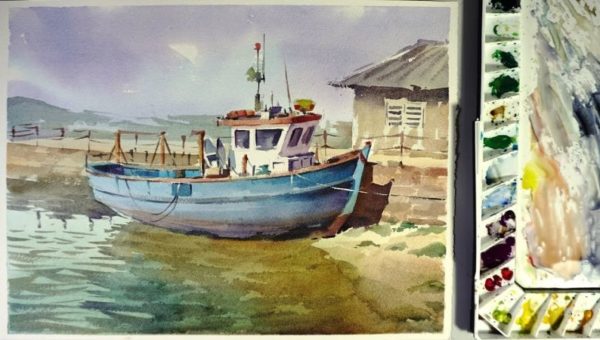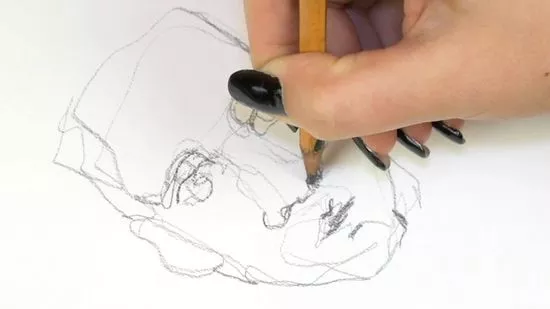





Plein air (from French en plein air – ‘in the air’) is a method of painting outside in the city street and in nature. The term ‘plein air’ is also used to denote the true reflection of the colourful palette of the nature depicted by the artist, all the changes of its colour under conditions of natural light and with the active role of the air and the environment.
Why can’t you just take a photo and paint it?
Our eye sees differently than the camera. And a picture painted from a photo is immediately noticeable: it is inferior in artistic value to painting from life, it has less sense of presence and truth. It does not touch the viewer as much as a sketch painted from life, in which you feel your emotions. This is where the real magic of painting begins.
Preparation for the plein air
Choosing materials
Watercolours, oil colours, graphic materials, pastels are suitable for plein air. It is better to start with watercolours: they are lighter in weight and very mobile. For painting with watercolours you don’t need a sketchbook, just a can of water, a sketchbook, three brushes of different sizes and the paints themselves. Also watercolour dries immediately. And then you can safely take home your masterpiece without fear of smudging and spoiling it.

Time and weather: when is the best time to paint?
It is more comfortable to paint in clear weather: the state of the environment does not change for a long time, there is no need to hurry. But any time for plein air is interesting. For example, in the morning you will pass by a nice street, and it will not be remembered by you in any way. But in the evening it will be illuminated by a beautiful sunset – and it will look attractive both in life and in your painting.
A scheme of work on the plein air
Tips for aspiring artists
We wish you a very good plein air!